


Bridge Tokens
Swap, bridge, and route value across 100+ chains and 20K tokens. Fast, cheap, reliable when it matters.

Build Cross-Chain
APIs, SDKs, and widgets with hooks for complex flows. Squid handles wallets, RPCs, fees, and DEX aggregation so you ship without rebuilding.

Connect to Squid
Plug your chain or token into 1M+ users, liquidity across chains, and distribution via 1K+ integrators, instantly.

Go Bespoke
Bespoke infrastructure for complex digital value flows. Stablecoins, FX, RWAs, private chains, built for compliance, reliability, and scale.
Powering 1K+ integrations
Trusted by leading wallets, chains, apps, protocols, and platforms. 1K+ integrators across DeFi, payments, AI, and more







Why Squid?
Fast. Reliable. Secure. Low fees. Reality-tested since 2022.
Based on a $100 ETH transaction from Ethereum mainnet. Intent-based architecture. Solvers compete for your route. liquidity aggregated across DEXs and offchain inventory.
POWERED BY SQUID
Learn how Squid helps teams scale across chains, unlock liquidity, and ship with confidence.
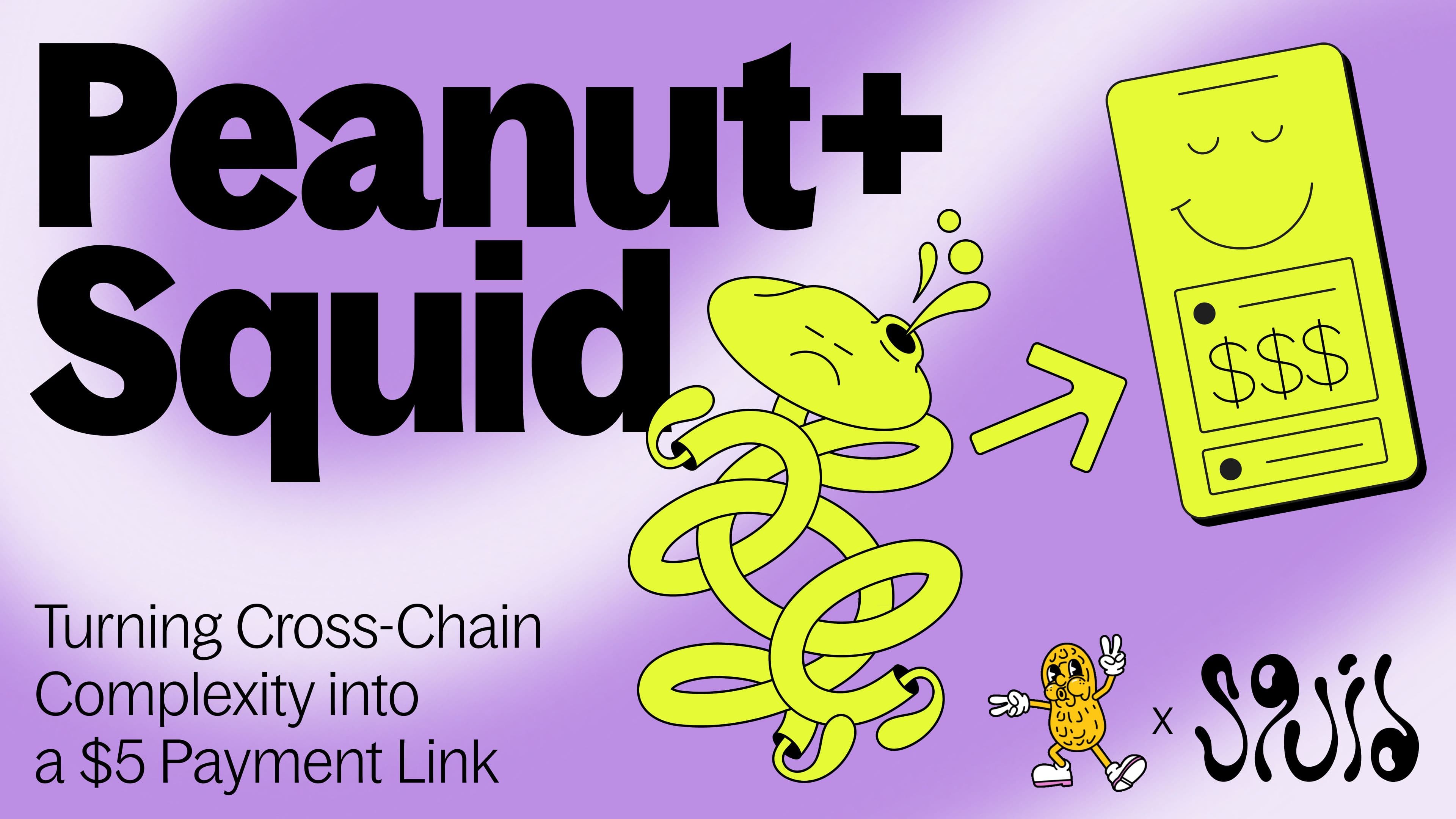
Peanut: Cross-chain payments without chain complexity
We powered Peanut’s cross-chain payment links, so users can send and claim digital cash without thinking about chains.

Circle: Cross-chain FX for stablecoins
We enabled EURC and USDC routes across Base, Ethereum, Avalanche, and Celo, giving apps simple rails for euro-dollar stablecoin swaps.
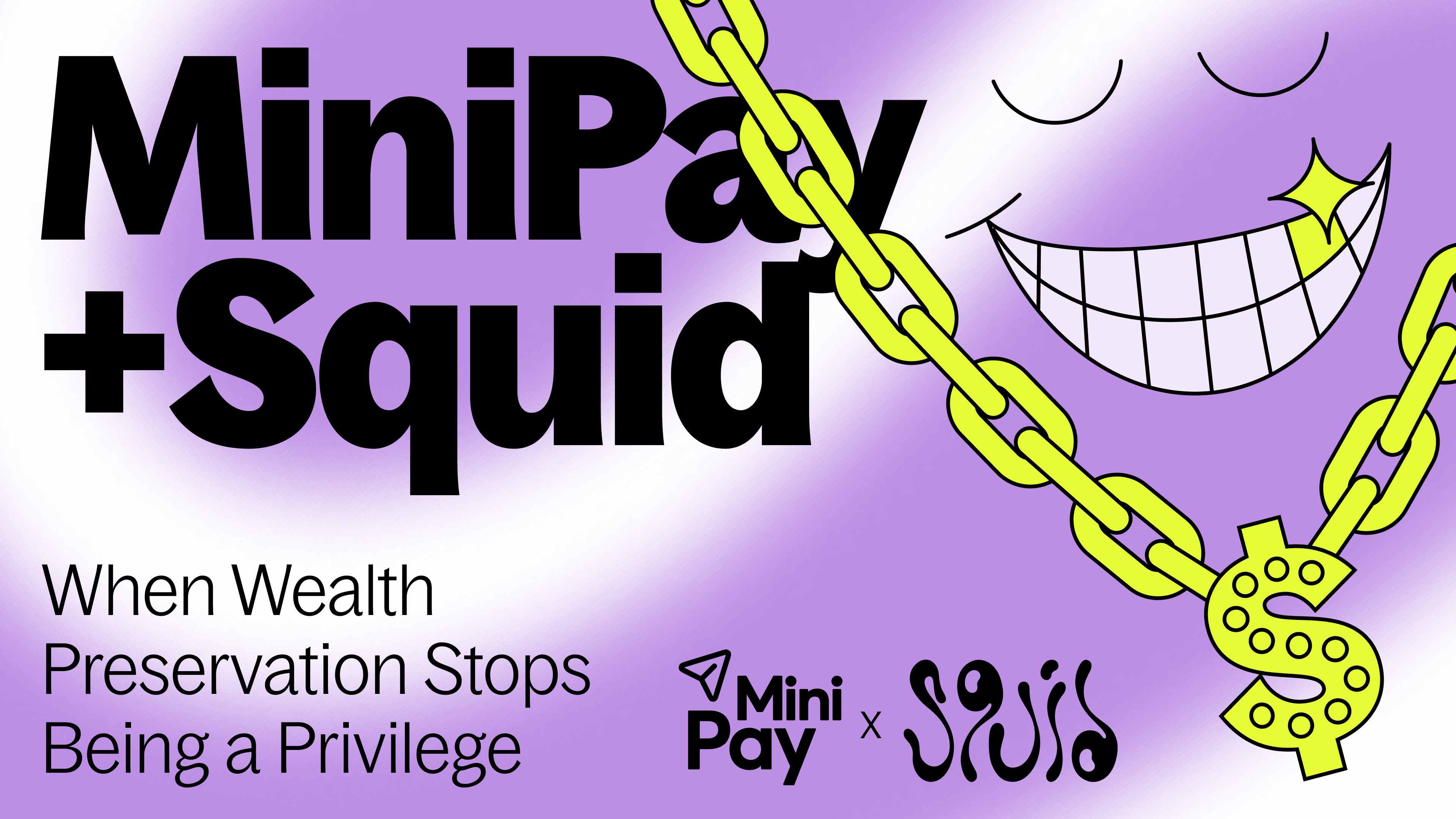
MiniPay: Tokenized assets, made mobile
We built in-wallet Mini Apps for MiniPay, making gold, BTC, ETH, and CELO accessible to mobile-first users.
EVERY TOKEN TYPE.
EVERY CHAIN.
Access DeFi, Stablecoins, Memes, RWAs and Gas tokens across 100+ chains including Ethereum, Solana, Bitcoin, Cosmos, XRPL, Stellar, Hedera and more.









What people are saying







Frequently asked
questions
Squid is a cross-chain platform spanning infrastructure, developer tools, and consumer products, all powered by the same routing and execution engine. It lets you swap, bridge, and route digital value across 100+ blockchains in a single transaction, whether you're swapping tokens, sending crypto across chains, exploring DeFi, building cross-chain features into your app, or onboarding an entire ecosystem. Squid has processed over $6B in cross-chain volume since 2023 and powers cross-chain features inside 1,000+ apps, including MetaMask, Ripple, and Ledger.
$QUID is the native token of Squid. $QUID marks an important milestone for the Squid Ecosystem. As the Squid Ecosystem continues to expand its product, ecosystem, and interoperability infrastructure, $QUID is intended to support participation in and engagement with the Squid ecosystem.
You select a source token on any supported chain and a destination token on any other chain, then confirm a single transaction. Squid's routing engine computes the optimal path, combining DEXs, bridges, and market makers, and executes the entire swap in seconds. There's no need to manually bridge to an intermediary chain, manage gas on multiple networks, or approve multiple transactions. You express intent, Squid handles the rest.
Squid supports 100+ blockchains and over 20,000 tokens. That includes EVM chains like Ethereum, Arbitrum, Base, and Polygon, non-EVM networks like Solana, Cosmos and Sui, and specialised ecosystems like XRPL, Stellar, Hedera, Canton and Celo. Squid aggregates liquidity from 130+ DEXs and offchain sources, so it can route between virtually any token pair. Stablecoins, memecoins, gas tokens, RWAs, and more, in a single step.
A bridge moves a single asset from one blockchain to another, often as a wrapped token. A cross-chain swap goes further: it bridges and converts in one transaction, so you can go from ETH on Ethereum to USDC on Arbitrum (or any other token-to-token, chain-to-chain combination) without extra steps. Squid handles both - pure bridging and full cross-chain swaps - through the same interface, routing through whichever path gives you the best price and speed.
Squid keeps fees minimal and transparent - you'll see the total cost (including any protocol fee and network gas) before you confirm. Fees are variable depending on the route and asset type, and Squid charges zero fees on stablecoin swaps. The Squid Intents execution engine keeps costs low by batching settlements, reducing onchain logic to simple token transfers, and running real-time RFQ auctions where solvers compete to fill your trade at the tightest possible spread. The rate you see before confirming is the rate you get.
Squid Intents is Squid's intent-based execution engine - the layer that makes cross-chain swaps fast, cheap, and reliable regardless of what the underlying chains are doing. When you submit a swap, Squid Intents runs a real-time auction where solvers (market makers) compete to fill your transaction at the best price. Because the auction happens after your deposit rather than before, there are no expiring quotes, no failed transactions from timeout windows, and tighter pricing since solvers can hedge immediately. Squid Intents uses Trusted Execution Environments for offchain coordination and a hub-and-spoke settlement model that keeps gas costs constant as volume scales. The result: sub-second execution, near-zero slippage, and dramatically lower failure rates than traditional bridge architectures. As new chains, token types, and liquidity sources emerge, Squid Intents' architecture absorbs them without requiring users or integrators to change anything.
Squid offers three integration paths: a REST API for full backend control, a JavaScript/TypeScript SDK for faster implementation, and a drop-in widget you can embed with minimal code. All three support cross-chain and single-chain swaps, pre- and post-transaction hooks for custom logic, and built-in fee collection so you can monetise cross-chain features in your product. Squid handles wallets, RPCs, gas, and DEX aggregation under the hood. Integration typically takes days, not months. Full documentation is available at docs.squidrouter.com.
Yes. Squid Connect lets chains and token issuers plug into Squid's network to access 1M+ users, liquidity across 100+ chains, and distribution through 1,000+ integrators. Squid supports EVM, non-EVM, SVM, app-chains, and even non-smart-contract chains. For standard integrations, onboarding is fast and includes immediate cross-chain routing. For complex requirements - private chains, custom settlement, compliance-specific flows, stablecoin infrastructure, RWAs. Squid builds bespoke solutions tailored to the use case. If you can describe the problem, Squid can build for it. Get in touch.
Squid powers cross-chain functionality for wallets like MetaMask, Ledger, and Brave; ecosystem partners like Ripple (XRPL), Stellar, Hedera, Celo, and Saga; payment platforms and neobanks; DEX aggregators; and asset issuers like Circle. Over 1,000 applications integrate Squid's infrastructure. The bridge app at app.squidrouter.com serves anyone who wants to swap tokens, send crypto across chains, explore DeFi, or manage a portfolio that spans multiple networks. Squid's user base runs from retail users making their first cross-chain swap to developers shipping products, institutions managing treasury flows, and chains looking for user and liquidity access.
Three things. First, coverage: Squid aggregates bridges, DEXs, and messaging protocols (including Axelar, CCTP, IBC, Chainflip, and LayerZero) rather than competing with any single one - the routing engine finds the best path across all of them. Second, the full-stack platform: Squid owns everything from protocol-level infrastructure through the routing engine to consumer products - a bridge app, developer tools, chain onboarding, and bespoke solutions, each built for a different audience but powered by the same engine. That end-to-end ownership means faster iteration, tighter integration, and the ability to absorb whatever complexity the ecosystem throws at it next. Third, track record: over $6B in volume, 4 years live, 9 audits, and zero exploits. Most cross-chain tools optimise for demos. Squid is optimised for production.
No. Squid was incubated in the Axelar ecosystem, but has since grown into an independent cross-chain infrastructure layer with its own protocol and stack. Squid Intents uses TEEs for execution and routes across multiple protocols.
Squid MCP is a Model Context Protocol server that lets you execute cross-chain swaps directly from an AI assistant like Claude. MCP is an open standard that connects AI models to external tools - Squid's MCP server connects them to cross-chain swap infrastructure. Instead of opening an app, you describe the swap in plain language, for example, "swap 1 USDC on Ethereum to ETH on Base", and the assistant handles quoting, route selection, and execution through Squid's routing engine. You can also check token balances across chains, browse supported tokens, and track transaction status, all within the conversation. Squid MCP currently supports EVM chains, with setup available via Claude Desktop and Claude Code. Full documentation can be found at docs.squidrouter.com.
Digital value is fragmented across hundreds of chains, wallets, and protocols - and the world it operates in isn't getting simpler. Markets shift, ecosystems multiply, new asset types emerge. Most infrastructure breaks under that kind of change, or hides the complexity behind interfaces that fail under real conditions. Squid exists to absorb that complexity so the people and products building on top of it don't have to. Chains proliferate, not consolidate - that's not a problem to solve, it's the reality to build for. Squid's job is to make that reality navigable: fast, reliable, and open to anyone ready to move.