
MiniPay + Squid: Wealth Access, Made Mobile
Gold has always meant something. Long before markets assigned it a ticker symbol, it carried a generational weight, a promise that value, once stored, wouldn't evaporate overnight. In Lagos, Nairobi, Manila, and São Paulo, that promise still holds. Access is the problem, not demand.
MiniPay, Opera's self-custodial stablecoin wallet built on Celo, was designed to make digital money simple for the people who need it most. Over 14 million phone-verified wallets across 66 countries. A user base that is mobile-first, price-sensitive, and already fluent in digital money: mobile money transfers, remittances, freelance income. What they haven't had is a simple, trusted path into wealth preservation and opportunities for wealth creation.
When MiniPay surveyed its users, 93% said they'd love to own digital or physical gold, and 60% said they'd try the feature immediately. The demand was obvious. The missing piece was a partner who could turn it into an experience simple enough for someone who has never held an investment-grade asset.
"There's this unmet need to buy gold in small amounts. It made digital gold a very natural next step, and Squid was the right partner to help us turn that demand into something simple." — Murray Spark, Head of Commercial & BD, MiniPay
When the MiniPay team told us what they were building, we were immediately drawn to it. A huge, real web2 company building in crypto with a use-case-first approach rather than speculation or gambling. That aligns with what we care about long-term. MiniPay comes at crypto from a web2 lens, and we thought this was a significant opportunity worth investing in.
On Celo, we handle the DEX aggregation and liquidity sourcing that makes tokenized gold (and now BTC, ETH, and CELO) accessible through Mini Apps. We brought technical and financial expertise on onchain assets, advising MiniPay on which assets to offer, how to source liquidity, and how to build a product that would make sense to people who have never touched DeFi. The turnaround from first conversation to live product was about two and a half months.
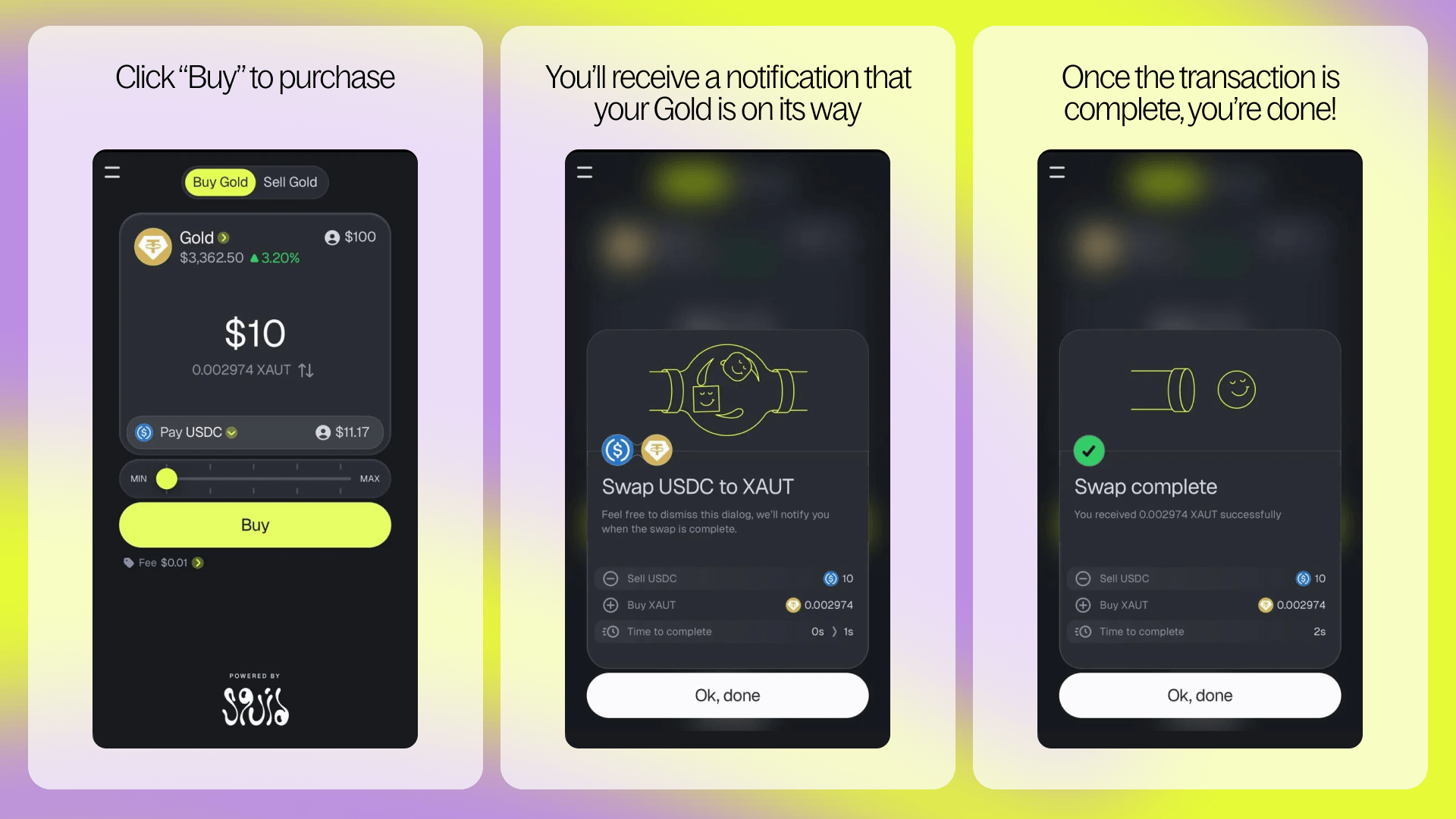
That speed was possible partly because MiniPay handles the wallet layer, which is one of the last frontiers of crypto's UX and developer experience challenges. With that elegantly covered, we could focus entirely on the functionality: how do you buy gold, how do you show a price, how do you present performance in a way that feels familiar? MiniPay also brings powerful distribution through notifications and campaigns, something that's almost impossible in DeFi where you don't have anyone's email and you're not downloaded onto an app. That combination of infrastructure and reach is what makes building with them so effective.
The hardest part was the UX itself. MiniPay's users pay for airtime with OPay in Nigeria, use M-Pesa in Kenya, send money through PIX in Brazil. They expect the same familiarity from every screen they touch. MiniPay already hosts over 45 Mini Apps for everyday use cases, from airtime to gift cards. Everything is phrased to feel friendly and natural: "add cash," not "add crypto." MiniPay's design standards require testing on low-end Android devices, displaying balances in local fiat, and identifying users by phone number rather than wallet address. So adding a gold experience had to feel like a natural extension of what users already knew.
"We tried very hard to abstract any of the crypto noise. Phone number registration, easy flows, prioritizing simplicity. That bespoke experience meant we could make the flow intuitive inside the wallet, bring down the friction, and present a solution that's familiar and local." — Murray Spark
Since launch, uptake has exceeded expectations on both sides. The gold Mini App has seen over 164,000 purchases from more than 88,000 unique users, with traction spread across West Africa, Southeast Asia, East Africa, and Latin America. Those 88,000 holders make Celo the leading network for omnichain Tether Gold, a milestone that caught the attention of the Celo Foundation. Gold resonates on a personal level in these markets where it's been passed through families for generations as jewelry and savings. The ability to start accumulating it from as little as a dollar, on a phone, in a self-custodial wallet, opened a door that hadn't existed before. A hugely successful Chinese New Year campaign reinforced the cultural resonance, and the numbers kept climbing.
The partnership expanded quickly from there. Together we've moved from gold into BTC, ETH, and CELO Mini Apps, broadening the investment suite to serve different user profiles. Celo consistently ranks as the number one L2 by daily active addresses, with 600,000 to 800,000 daily active users, and MiniPay is a significant contributor to that activity. For the Celo Foundation, seeing users across 66+ countries go straight from downloading MiniPay to buying gold, Bitcoin, and Ether represents something they've been working toward for six years.
"When you give users a tokenized real-world asset they want, make it accessible, and create an intuitive user experience, adoption follows. All of these products are helping us achieve the original mission Celo set out to accomplish: bring financial solutions to users on their mobile devices." — Anna Alexa, Head of Growth, Celo Core Co.
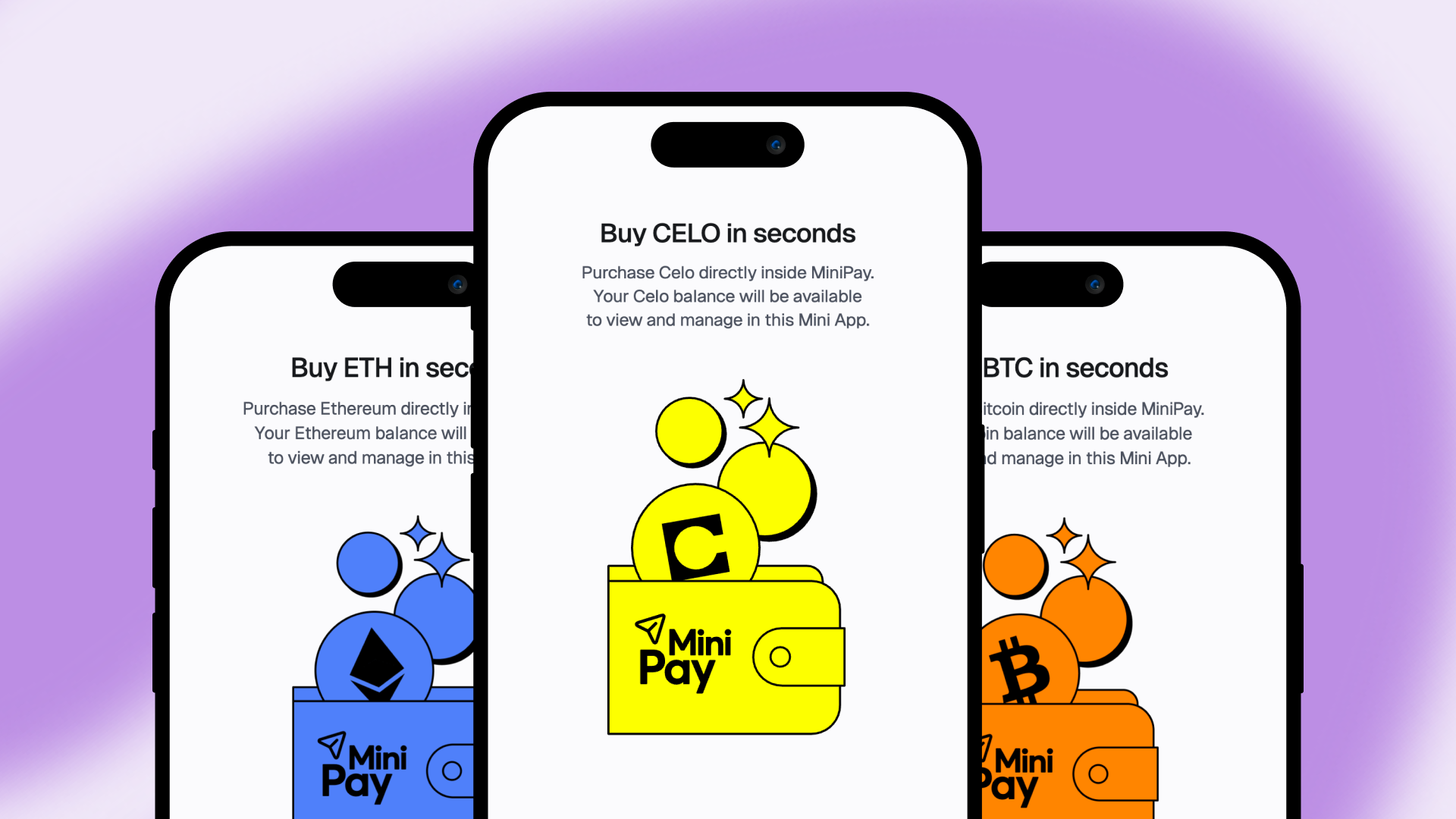
And now MiniPay users can become stakeholders in the underlying network itself with the Buy CELO Mini App. What started as a stablecoin wallet is evolving more broadly into a gateway to asset ownership, with staking and governance participation on the horizon. Still, the menu stays intentionally small: a few key assets, not the multitudes, in a clean, trusted environment.
Working with MiniPay pushed us to think differently about product. Opera has been building browsers and software for 30 years, and that depth of knowledge about simplicity shaped every conversation. We adapted based on user feedback and local market needs, and the collaboration extended well beyond the technical build into design, go-to-market strategy, and campaign co-creation. Murray calls the combination of technical depth and responsiveness "a huge part of what's making the partnership valuable," and Celo has since featured our work building Mini Apps in its Founder Stage as an example for other builders across the ecosystem.
"If you're looking for a strong partner that wants to turn complex blockchain infrastructure into a simple, user-friendly product, I don't think you should look any further. Outstanding technical depth, real flexibility, willingness to adapt." — Murray Spark
Chapter two is already taking shape. The next phase focuses on deeper product integration, making the experience feel more native inside MiniPay, with smoother user journeys and reduced friction so the investment suite sits naturally in the wallet without users ever thinking about the infrastructure underneath.
For someone in Nigeria, Brazil, or the Philippines who is already comfortable with digital money but has never had a way to store value in a trusted asset, this changes what's possible. They can hold fractional digital gold, Bitcoin, and Ether in the same wallet they use to buy airtime, with wealth preservation delivered in the language and flow they already trust. That's financial inclusion as a product, not a talking point.