
The State of Stablecoins
The State of Stablecoins
The trillion dollar market is coming. Stablecoins are the new era of money. What are they, and where are they going?
We’ve covered The State of Money (here - in case you missed it), now we dive into The State of Stablecoins.
National currencies, cash, stablecoins. This is modern day money.
Cash changes hands and currencies stay in one country. Stablecoins, however…
Well, they offer more. Here’s what you’ll find if you keep reading:
Let’s dive in.
The Evolution of Stablecoins
Stablecoins have played a large role in crypto for years now. In simple terms: stablecoins are digital assets that represent fiat currencies, most commonly US dollars.
The first stablecoins arrived around ten years ago, created to give crypto traders a stable place to rest between trades without cashing out to a bank. While the early years of crypto saw experimental mechanisms when it came to stablecoins (along with disastrous consequences, *cough* Terra), there have also been those backed by the currency they represent, and resilient through even the worst market volatility.
Tether (UST) launched in 2014. DAI, a crypto-backed and decentralized alternative, followed in 2017. USDC arrived in 2018 with a focus on transparency and regulated reserves.
Not every stablecoin earned its name, though. Algorithmic designs that relied on incentives and confidence rather than real reserves proved fragile, and the collapse of one of the largest, TerraUSD, shook the industry (learn more here). The lesson was clear, “stable” isn’t just a word, but something that must be earned.
Stablecoins Today
Here’s the latest in the news about stablecoins:
Recent news surrounding stablecoins has been more than positive–it has been transformational. Sentiment is extremely high, and for good reason.
The numbers speak for themselves, but this is about more than just metrics. This is about the many possibilities unlocked by stablecoins, today, tomorrow, and for years to come.
For scale, total stablecoin supply hit an all-time peak of roughly $322 billion in May 2026 before settling a little lower. That’s a long way from the roughly $27 billion at the end of 2020. And as the headlines above suggest, the story is shifting from how much supply exists to how much it’s being used.
Coinbase Research recently released their October 2026 report, titled: The Always-On Dollar: Money for an Economy that Doesn’t Close, puts it well. Its core point is that stablecoins match the always-on and global nature of today’s economy in a way legacy rails don’t, and that this works for people, businesses, and the banks and institutions supporting them:
The report also covers how much families are saving with stablecoins, the net annual global GDP gains that could be unlocked by moving international transactions onchain, and how TradFi and crypto are coming together to build the future of finance onchain. You can read the full report here.
“Stablecoins are making dollar payments work better for all three – and for the banks and institutions supporting them. Unlike legacy rails, stablecoins match the always-on and global nature of today’s economy.” - Coinbase Research
Solving Complexity
Stablecoins may have widened access to the US dollar globally, but access is not the same as ease, and stablecoins still have friction:
Just as money, the infrastructure is there, but not the interface (yet). With the Squid app coming, watch this space.
Squid and Stablecoins
Squid supports over 20,000 assets across 100+ chains, including all major stablecoins. We work alongside top projects that are pioneering the growth and development of stablecoins across the globe, such as Circle, Ripple, Celo’s MiniPay, Tempo, Peanut, and more.
The Squid team works each day to solve those remaining challenges which stablecoins face. We connect chains and ecosystems to provide seamless access to any stablecoin on any chain.
Here are some highlights:
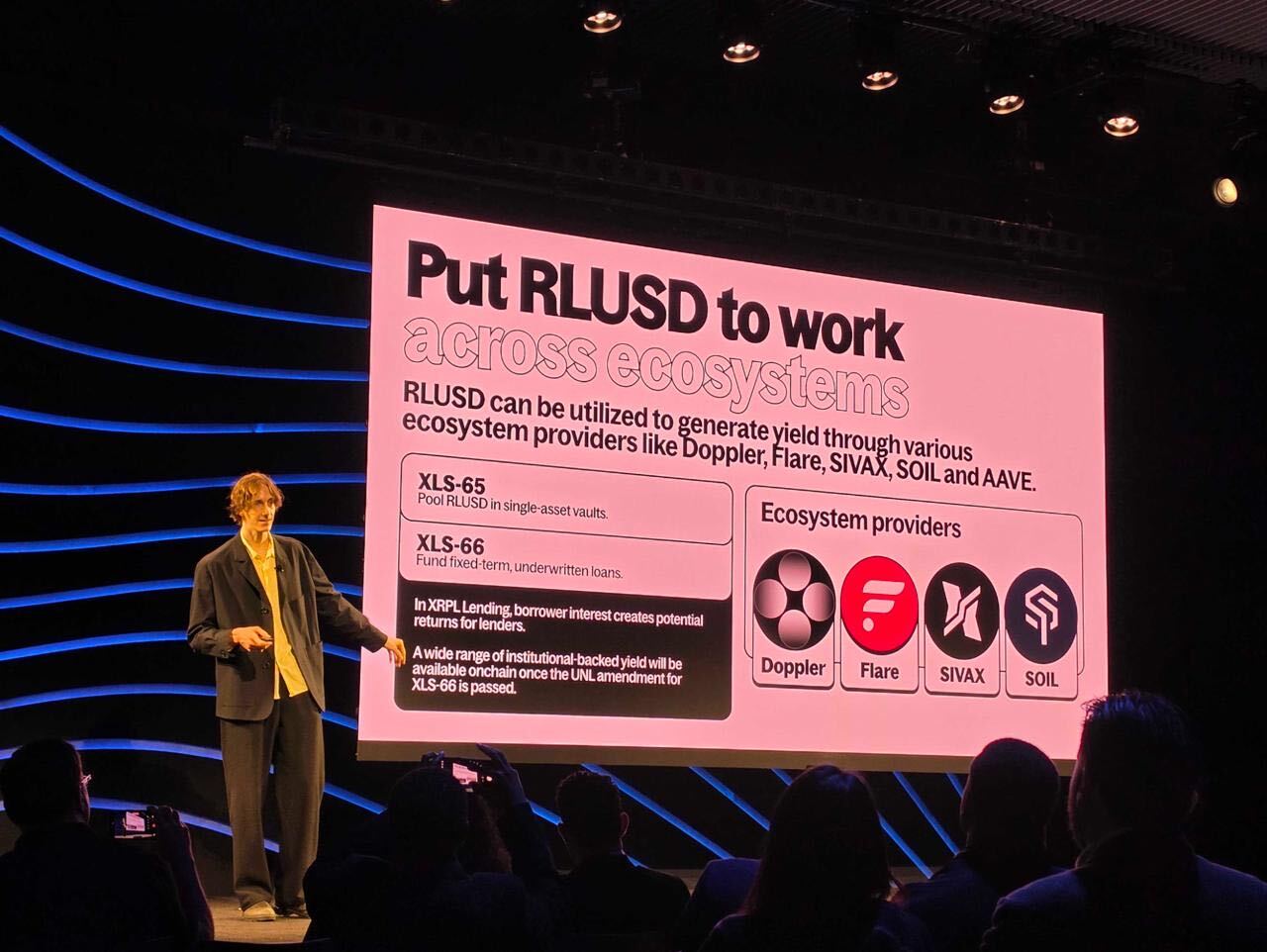
More on RLUSD: Co-Founder Fig was in NYC last week at Ripple Swell, talking about Banking and Trading with RLUSD in a multichain world.
We believe that stablecoins will play an integral role in the future of finance. You should have access to any currency, no matter where you are in the world. You should never feel limited by the cash you carry, and stablecoins are on their way to ensuring this is the case.
Digital assets exist, and stablecoins offer more to money for people around the globe. From borderless payments to easily buying and holding national currencies outside of your own, stablecoins offer a new era of money. One that increases individual accessibility to money, further promotes transparency between governments and citizens, and creates new and exciting ways for us to interact with and think about money.
Going through customs shouldn’t devalue the cash in your pockets from another country. Participating in international business should be easy, from the first call to the final payment. Even if it requires large sums of money to be paid upfront, you should have access to the same ease of settlement as you do back home.
Stablecoins are the next era of currencies, the method of payment we’ve needed to push past the latest blocker in globalization, and truly liberate ourselves from opportunities confined within borders. These digital currencies do as much for our nations as they do for us citizens.
When cash becomes accessible, it becomes valuable in ways that a number can’t define. It becomes the method in which we communicate our growth, our innovations, our success. It no longer restrains us, but allows us to achieve our dormant dreams.
Global Accessibility
Most of today’s stablecoins are backed 1:1. Like the US Dollar or the Euro, their value remains the same, whether it’s in cash or onchain.
Let’s look at USDC, for example. USDC is the primary stablecoin of the US dollar, backed by Coinbase and Circle, and favored heavily by institutions for its compliant and regulated nature.
1 USDC is the onchain equivalent of 1 US Dollar.
This is the same for other popular USD stablecoins, such as Tether (USDT), PayPal USD (PYUSD), and Ripple USD (RLUSD). The dollar is a popular currency to peg a stablecoin to because of its global reach, and for its perceived stability and value.
But there are plenty more stablecoins pegged to other national currencies, too.
For instance, the Euro is onchain as EURC, which is a 100% euro-backed, MiCA-compliant stablecoin issued by Circle that maintains a 1:1 reserve model with the euro.
Additional stablecoins include:
These stablecoins exist onchain and offer efficient settlements, cross-border payments, and optimized retail and enterprise experiences when it comes to money.
Regulation has arrived, too. In the US, the GENIUS Act was signed on 18 July 2025 as the first federal stablecoin law, setting rules for reserves, redemption, disclosure, and licensing. With the OCC’s final rule now in the news, implementation is moving forward. In the EU, MiCA is already shaping how stablecoins operate.
From a trader’s tool to regulated financial infrastructure, stablecoins have grown up.
The Future of Stablecoins
With presence and use skyrocketing, stablecoins are on track to reach $1.5 trillion in quarterly volumes by the end of 2027, according to Coinbase Research estimates.
Here’s what else we’re watching:
The future of stablecoins is the future of money.
Just as they are today, they will be tomorrow:
1:1.
Looking Forward
Stablecoins are the clearest example of what financial access can look like: money that is global, always on, and open to anyone with a phone. They’re also a clear example of what’s still missing. Complex tools, scattered networks, and too few approachable resources still stand between people and what’s possible.
That’s the gap we’re working to close, with infrastructure, with the Squid app, and with education like this series.
We hope you enjoyed catching up on the state of stablecoins. Stay tuned for the next in the series!
There has never been more to money. And the more you understand it, the less there is to miss.
Follow along on X and at squidrouter.com/blog. Join the Squid app early-access list at squid.inc.
Please Note
This blog is provided for educational and informational purposes only. This is not investment advice or a recommendation or solicitation for on-chain participation in any mentioned chains, tokens, or assets. Please do your own research before swapping any on-chain assets.
About Squid
Squid is the leading cross-chain platform, delivering unlimited access to blockchains and digital assets for both users and builders alike. Since 2023, Squid has processed over $6 billion in volume. Its frontend bridge app has served over 1 million users, and its API, SDK, and Widgets are trusted by more than 1,000 teams worldwide. The Squid app will be launching on mobile soon, with the early-access list now open to join at squid.inc.