What is staking? Crypto staking explained.

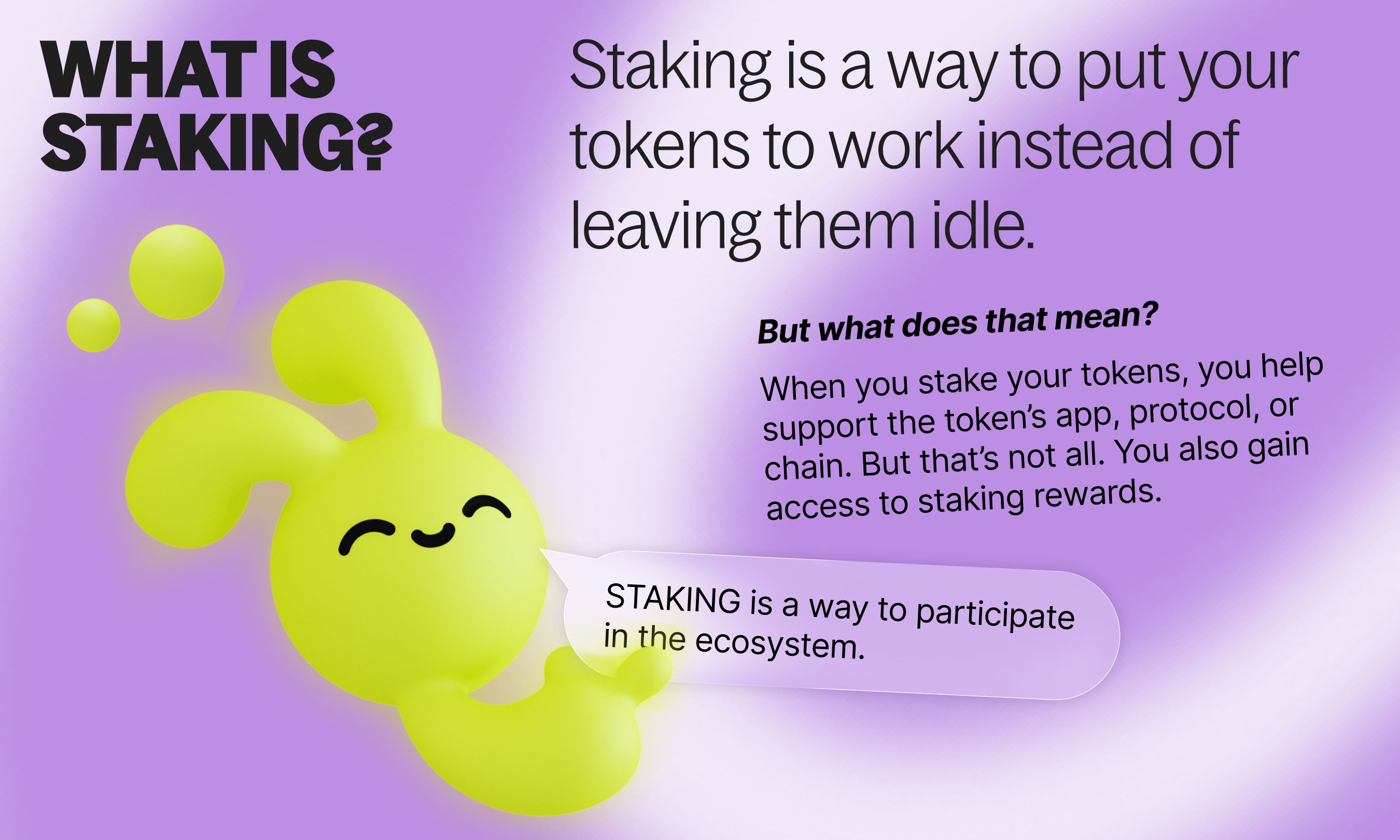
What is staking?
Staking is a way to put your tokens to work instead of leaving them idle.
But what does that mean?
When you stake your tokens, you help support the token’s app, protocol, or chain. But that’s not all. You also gain access to staking rewards.
Staking is a way to participate in the ecosystem.
How does staking work?
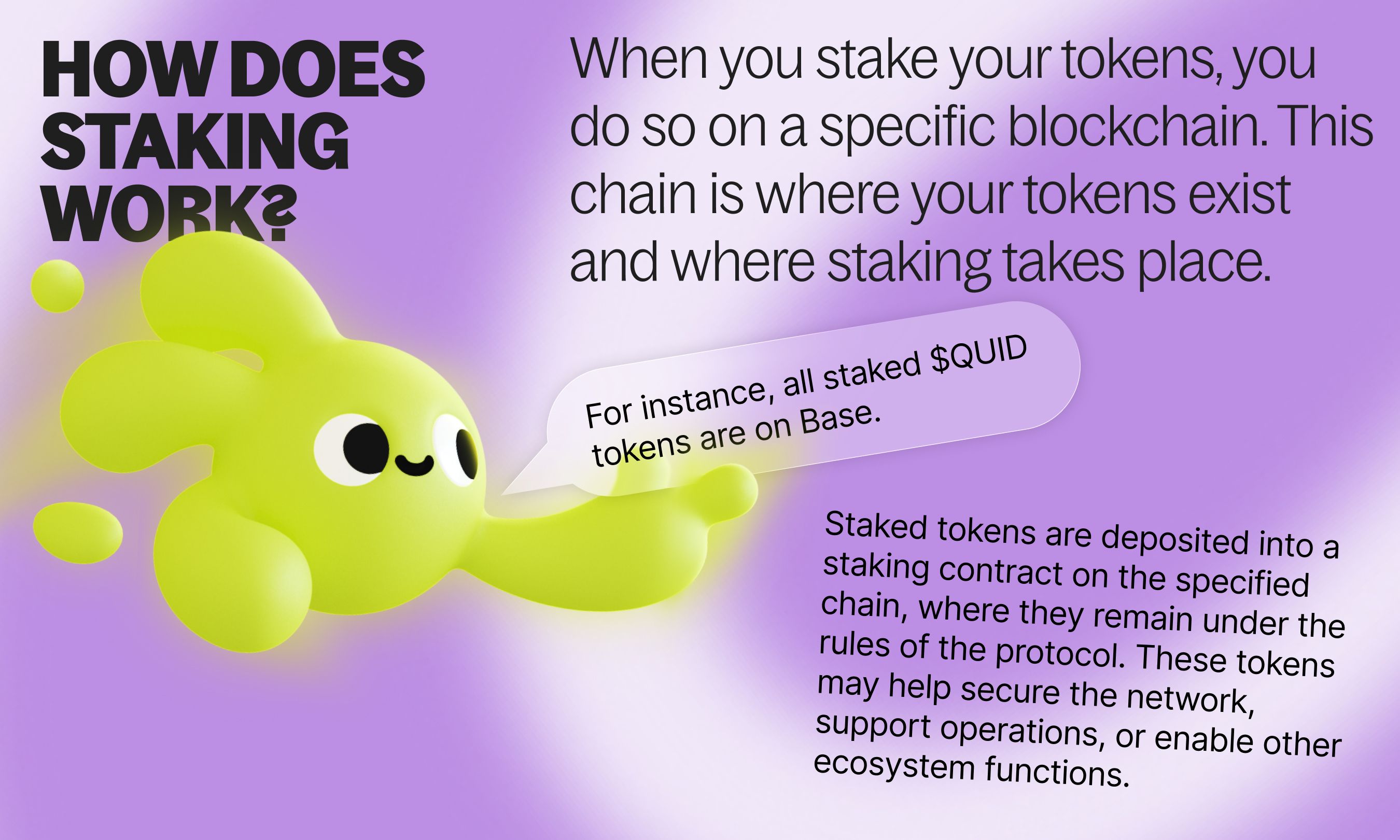
When you stake your tokens, you do so on a specific blockchain. This chain is where your tokens exist and where staking takes place.
For instance, all staked $QUID tokens are on Base.
Staked tokens are deposited into a staking contract on the specified chain, where they remain under the rules of the protocol. These tokens may help secure the network, support operations, or enable other ecosystem functions.
Where do rewards come from?
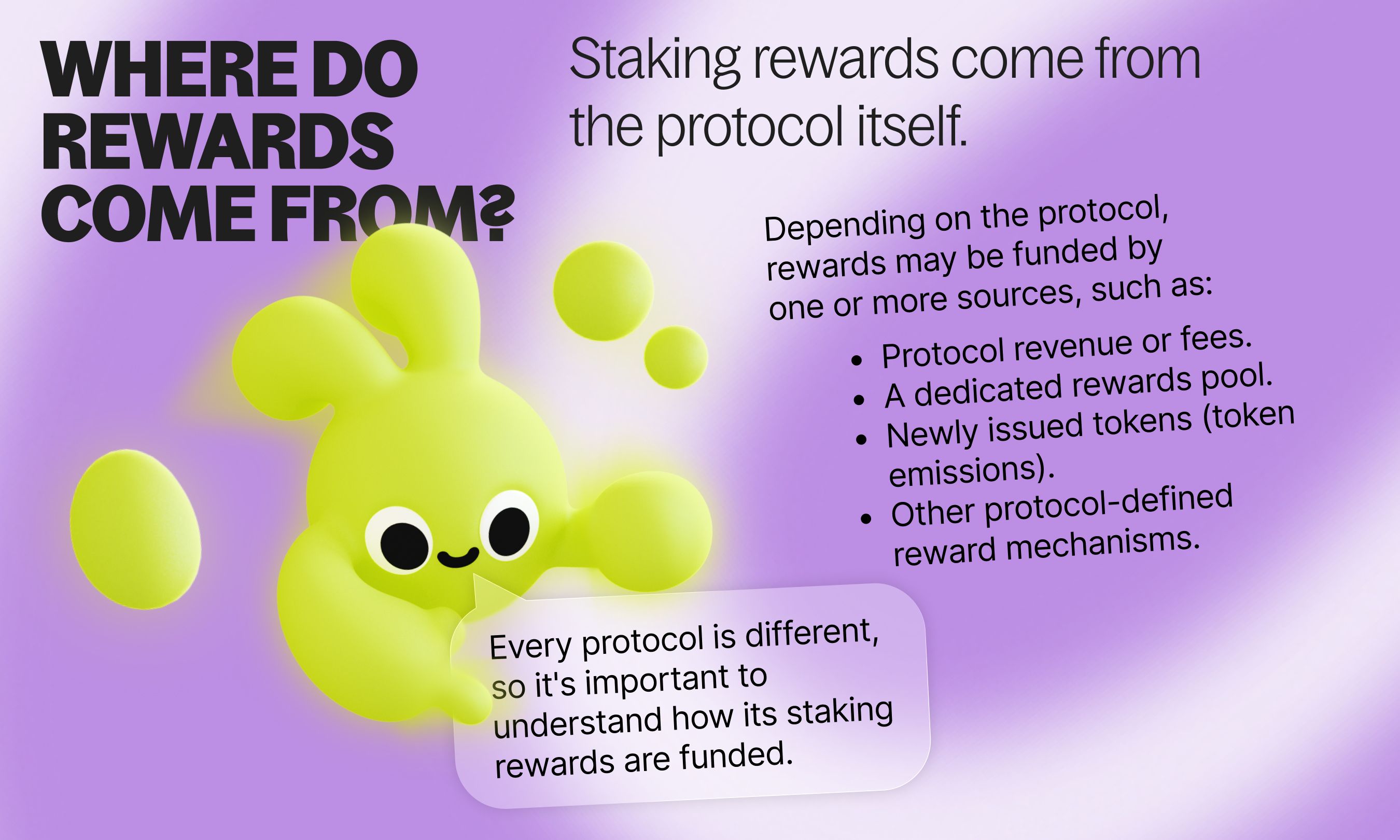
Staking rewards come from the protocol itself.
Depending on the protocol, rewards may be funded by one or more sources, such as:
Every protocol is different, so it's important to understand how its staking rewards are funded.
How much are rewards?
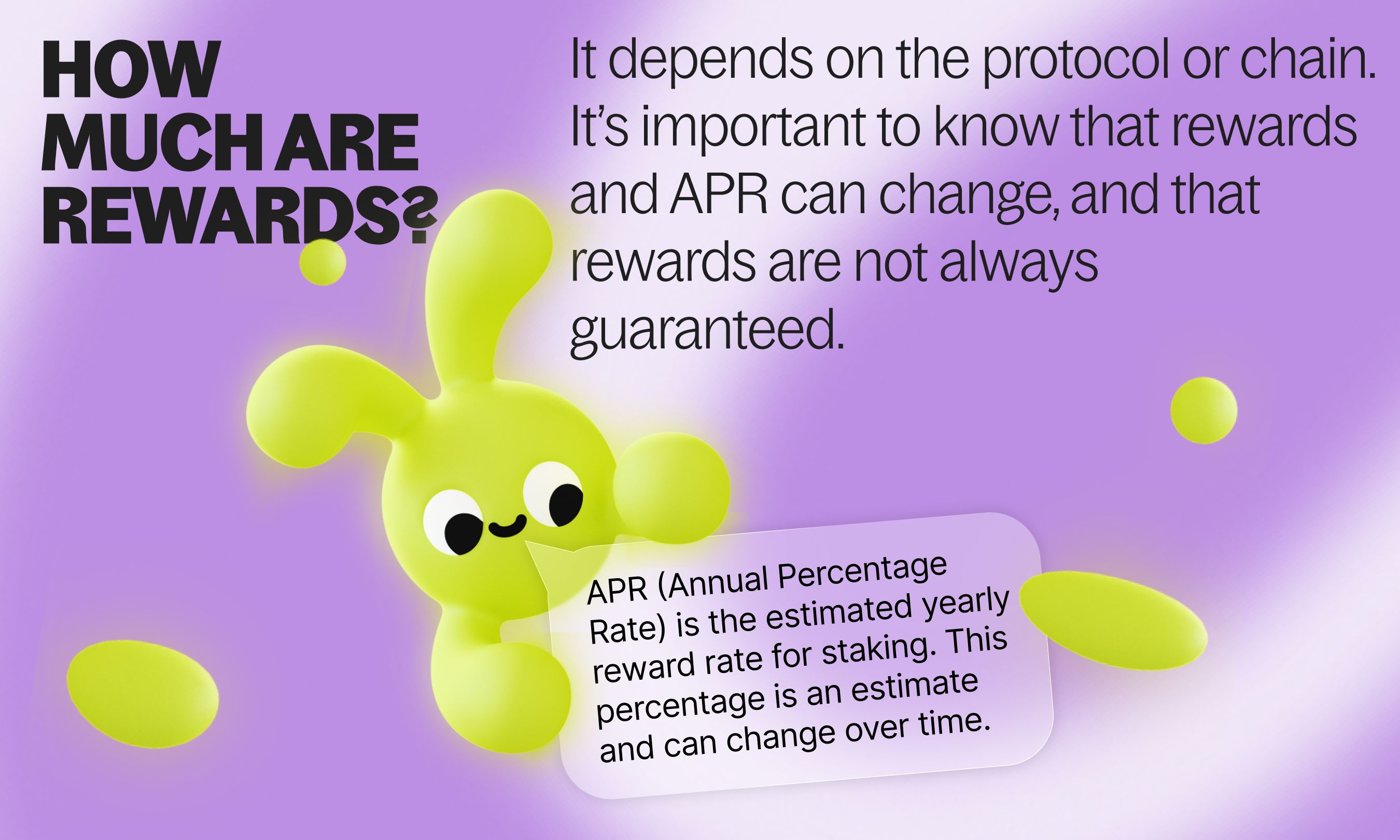
It depends on the protocol or chain. It’s important to know that rewards and APR can change, and that rewards are not always guaranteed.
APR (Annual Percentage Rate) is the estimated yearly reward rate for staking. This percentage is an estimate and can change over time.
Are staked tokens locked?
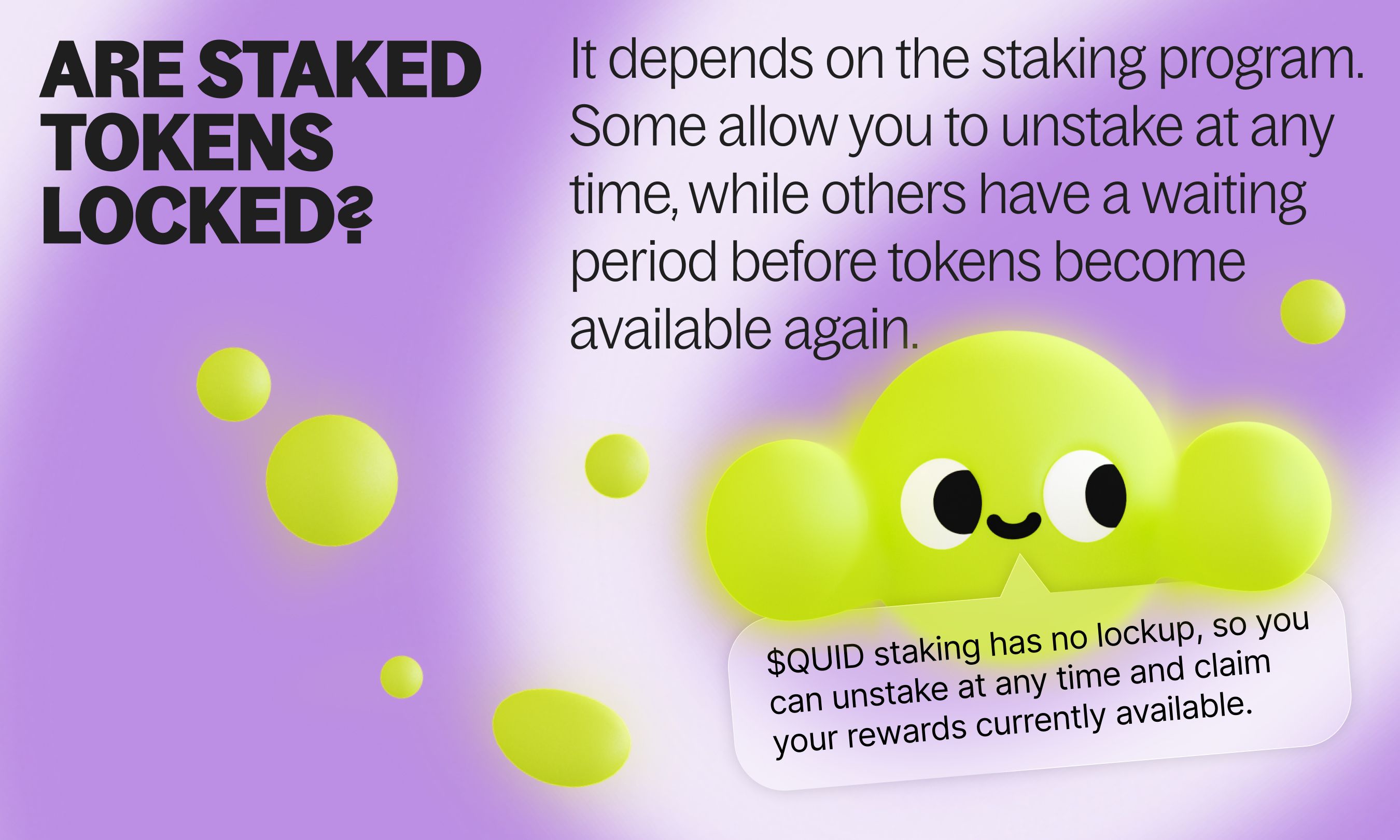
It depends on the staking program.
Some allow you to unstake at any time, while others have a waiting period before tokens become available again.
$QUID staking has no lockup, so you can unstake at any time and claim your rewards currently available.
Before you stake, remember to:
This article is provided for educational and informational purposes only. This is not investment advice or a recommendation or solicitation for on-chain participation in any mentioned chains, tokens, or assets. Please do your own research before swapping any on-chain assets.